
PROFLOORTECH · Technical Application Guide
Applications of
Anti-static Calcium Sulfate
Raised Access Floor Systems
Engineering-grade guidance for data centers, control rooms, laboratories, and industrial facilities. Understand where anti-static raised floors are required, why they are specified, and how to select the correct system for your project.
Segments
EN 13501-1
Resistance
Grade
Engineering Definition
What Is an Anti-static Calcium Sulfate Raised Access Floor?
An anti-static calcium sulfate raised access floor system is a modular elevated structural floor assembly. Panels manufactured from compressed natural gypsum (calcium sulfate) cores, encapsulated in galvanized steel, are supported on height-adjustable pedestals to create a continuous sub-floor plenum.
The ESD-controlled surface finish maintains surface resistance within 10⁶-10⁹ Ω per IEC 61340-4-1, protecting sensitive electronic equipment from electrostatic discharge. The plenum distributes power, data cabling, and HVAC airflow while providing full maintenance access to sub-floor infrastructure.
System Cross-Section -- Exploded View
① Finish Layer
② Panel
③ Stringer
Power · Data · HVAC Plenum
④ Cable Space
⑤ Pedestal
Plenum Height: 100 - 1,000 mm (adjustable)
Core Engineering Benefits
Why Anti-static Raised Floors Are
Specified in Technical Environments
Four engineering requirements drive anti-static raised floor specification in data centers, control rooms, and critical facilities worldwide.
Static Protection
ESD-controlled surface finish maintains 10⁶-10⁹ Ω resistance, preventing electrostatic discharge that can corrupt data, damage ICs, or trigger false alarms in sensitive equipment.
IEC 61340-4-1 Compliant
Cable Management
Sub-floor plenum provides segregated routing for power, data, and HVAC. Cable fill ratio up to 40% of cross-section. Individual panels lift without tools for instant access to any sub-floor service.
150-1,000 mm Plenum
Fire Safety
Natural gypsum core achieves Class A1 non-combustible classification per EN 13501-1. Zero contribution to fire load in the sub-floor void -- mandatory for data centers, financial institutions, and all occupied critical facilities.
Class A1 EN 13501-1
Future Maintenance
Individual panels lift in seconds using standard suction cup tools. Full sub-floor access for cable upgrades, fault isolation, and infrastructure changes without disrupting operations or requiring structural work.
Tool-free Panel Removal
Typical Applications
Where Anti-static Calcium Sulfate
Raised Floors Are Specified
Eight technical environments where anti-static raised access floor systems are the engineering standard. Each application presents distinct structural, ESD, and fire safety requirements.

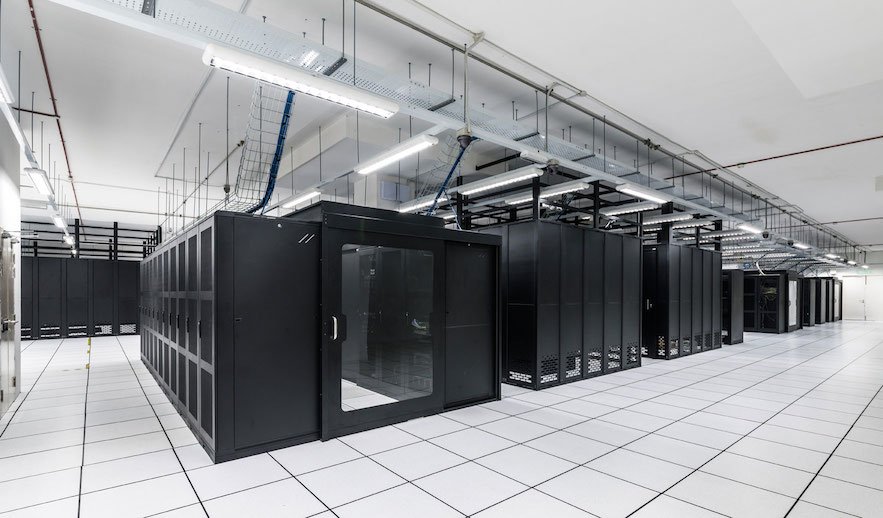
Data Centers
UFAD cooling delivery, PDU cabling, and structured data cabling in Tier I-IV, hyperscale, and edge computing facilities.
Anti-static Calcium Sulfate
ESD HPL / Conductive PVC
Server Rooms
Enterprise server rooms requiring ESD control, cable management, and reliable HVAC distribution for 24/7 IT operations.
Anti-static Calcium Sulfate
Full Stringer Pedestal System

Control Rooms
SCADA, DCS, NOC, and process control rooms where cable segregation, ESD protection, and acoustic performance are critical.
Anti-static Calcium Sulfate
ESD HPL / ESD Vinyl

Telecom Rooms
Telecommunications exchange rooms and network infrastructure spaces requiring high cable density management and ESD-controlled environments.
Anti-static Calcium Sulfate
Perforated Airflow Panels
Electrical Rooms
Substations and MV/LV switchgear rooms with heavy equipment loads requiring high load-grade panels and ESD grounding to building earth.
Heavy-Duty Calcium Sulfate
Heavy-Duty Stringer System

Financial Trading Rooms
High-density trading floors requiring rapid cable reconfiguration, Class A1 fire compliance, and ESD control for multi-screen workstations.
Anti-static Calcium Sulfate
HPL / ESD Vinyl / Carpet

Laboratories
Pharmaceutical, semiconductor, and research laboratories requiring ISO clean room compliance, ESD control, and chemical-resistant sealed panel surfaces.
Fully Encapsulated Panels
ESD HPL (Sealed Edges)
Industrial Control Rooms
Power plant and industrial facility control rooms with heavy UPS systems, battery banks, and switchgear requiring maximum load-grade panels and humidity resistance.
High-Density Calcium Sulfate
Industrial ESD HPL
Engineering Selection Guide
How to Select the Right
Raised Access Floor System
Follow this decision flowchart to identify the correct system specification for your project in under two minutes.
System Selection Flowchart
① Project Type
Office / Technical Room / Industrial?
② ESD Protection Required?
NO → Standard
③ Required Load Grade?
≤ 10 kN → FS 1000
≤ 15 kN → FS 1500
≤ 20 kN → FS 2000
④ Recommended Finish?
Control Room → ESD Vinyl / HPL
Industrial → Industrial ESD HPL
✓ Recommended System
Anti-static Calcium Sulfate
PROFLOORTECH CS Series · Factory-direct
Identify Project Type First
Classify your space: technical room (data center, control room, lab), commercial office, or industrial facility. This determines the base system specification and applicable standards (EN 12825, CISCA, TIA-942-B).
ESD Requirement Governs Finish
Any environment housing sensitive electronic equipment requires ESD-controlled flooring. Surface resistance must be within 10⁶-10⁹ Ω (dissipative) or 10⁴-10⁶ Ω (conductive for semiconductor/explosive zones). This determines your finish specification.
Load Grade is Non-Negotiable
Calculate the maximum concentrated load from the heaviest single piece of equipment or maintenance load. Apply EN 12825 Section 5.3 methodology. The most restrictive load governs -- never underspecify. Panel deflection must not exceed 2.5 mm at design load.
Plenum Height Drives Pedestal Selection
Plenum height is determined by cable volume, UFAD airflow requirements, and structural slab tolerance. Standard range: 150-300 mm (office/control), 300-600 mm (data center), 600+ mm (high-density/UFAD). Stringer systems are mandatory for FS 1000+ load grades.
Quick Reference: Application → System
CS Anti-static FS 1000-1500
CS Anti-static FS 800-1000
CS Anti-static FS 1000-1500
CS Heavy-Duty FS 1500-2000
OA / Wood-core FS 800
System Comparison
Commercial Office vs.
Anti-static Technical Room Systems
Not every raised floor project requires anti-static specification. Understand which system is correct for your application before specifying.
Commercial Office
Commercial Office Environments
General offices, open-plan workspaces, meeting rooms
Standard office environments with moderate cable density and no sensitive electronic equipment do not require anti-static specification. OA (Office Area) systems with wood-core or steel-encapsulated panels are cost-effective and appropriate.
Recommended Systems:
OA Bare Finish (standard HPL)
Steel Encapsulated FS 800
Grooved Panel (carpet finish)
Wood-core FS 800 (stringerless)

Technical Room
Technical Room Environments
Data centers, control rooms, labs, financial trading floors
Technical rooms housing sensitive electronic equipment, high cable density, or critical infrastructure require anti-static specification. ESD control, Class A1 fire rating, and high load capacity are non-negotiable engineering requirements.
Recommended Systems:
Anti-static Calcium Sulfate FS 1000-2000
Perforated Airflow Panels (25% open)
Heavy-Duty Stringer System
ESD HPL / Conductive PVC Finish
Commercial vs. Anti-static System -- Feature Comparison
| Feature | Commercial OA System | Anti-static Calcium Sulfate |
|---|---|---|
| ESD Control | Not required | 10⁶-10⁹ Ω |
| Fire Classification | Class B-D | Class A1 (non-combustible) |
| Load Grade | FS 800 | FS 800 - 2000 |
| Core Material | Wood-core / Steel | Natural Gypsum (CaSO₄) |
| Humidity Stability | Susceptible to expansion | <0.3% dimensional change |
| UFAD / Airflow | Not typically required | Perforated panels available |
| Certifications | EN 12825 | EN 12825 · CISCA · MOB · CE |
| Best For | General offices, retail | Data centers, control rooms, labs |
Performance Features
Six Engineering Performance
Characteristics
Anti-static calcium sulfate raised floor systems deliver six critical performance characteristics that make them the global standard for critical infrastructure.
High Load Capacity
Concentrated load grades from FS 800 to FS 2000 (8-20 kN). High core density (1,100-1,600 kg/m³) delivers superior structural performance. Maximum deflection ≤ 2.5 mm at design load per EN 12825.
Fire Resistance
Class A1 non-combustible classification per EN 13501-1. Natural gypsum core releases no combustion products, no smoke, and contributes zero fire load. Highest achievable Euroclass rating -- mandatory for all critical infrastructure.
Static Control
ESD-controlled surface finish maintains 10⁶-10⁹ Ω (dissipative range) per IEC 61340-4-1. Continuous grounding through pedestal network to building earth. Protects ICs, storage media, and control systems from electrostatic discharge events.
Dimensional Stability
Less than 0.3% dimensional change under cyclic humidity variation (20-95% RH). Calcium sulfate cores do not expand or contract with moisture changes, preventing edge lifting, panel rocking, and joint opening that affect wood-core alternatives.
Cable Flexibility
Sub-floor plenum provides fully accessible cable routing for power, data, and HVAC. Individual panels lift in seconds for instant access to any sub-floor service. Cable fill ratio up to 40% of plenum cross-section. Supports rapid infrastructure reconfiguration without downtime.
Long Service Life
25+ year service life in correctly specified installations. Galvanized steel encapsulation prevents edge damage and core degradation. Individual panels can be replaced without disturbing adjacent panels, extending system life indefinitely. No organic material means no rot, mold, or biological degradation.
Engineering Comparison
Raised Floor Panel Types:
Full Engineering Comparison
Compare the four main raised access floor panel types across key engineering parameters to select the correct specification for your project.

Anti-static Calcium Sulfate
PROFLOORTECH CS Series
Steel Encapsulated
Standard calcium sulfate

OA Bare Finish
Commercial office system
Wood-core
Budget commercial option
| Parameter | Anti-static Calcium Sulfate |
Steel Encapsulated |
OA Bare Finish |
Wood-core |
|---|---|---|---|---|
| Fire Class | A1 | A1 | A1 | B-C |
| ESD Control | 10⁶-10⁹ Ω | Optional | No | No |
| Max Load Grade | FS 2000 | FS 1500 | FS 800 | FS 800 |
| Humidity Stability | <0.3% | <0.3% | <0.3% | 2-4%+ |
| Airflow Panels | Available | Available | Limited | No |
| Advantages | ESD + fire + high load + stability | Fire + high load + stability | Cost-effective, easy install | Lowest cost |
| Limitations | Higher unit cost | No ESD standard | Low load, no ESD | Fire risk, moisture issues |
| Best Applications | Data centers, labs, control rooms | Technical rooms, general IT | Commercial offices | Budget office fitout |
All calcium sulfate panel types comply with EN 12825:2001. Anti-static specification requires additional ESD testing per IEC 61340-4-1. PROFLOORTECH supplies all panel types with factory-direct pricing and CISCA/MOB/CE certification.
Technical FAQ
Frequently Asked Questions
Engineering, installation, performance, and maintenance questions answered by PROFLOORTECH's technical team.
Engineering
Which raised access floor system is specified for data centers?
For Tier I-IV data centers, anti-static calcium sulfate raised access floor panels rated FS 1000 (10 kN) are the standard specification. High-density facilities require FS 1500 (15 kN). Key requirements: Class A1 fire rating (EN 13501-1), ESD dissipative surface (10⁶-10⁹ Ω per IEC 61340-4-1), full stringer pedestal system, and 450-600 mm plenum height for combined UFAD and cable management. All panels must comply with EN 12825:2001.
What is the required anti-static resistance range for data center raised floors?
The required surface resistance range for data centers and IT environments is 10⁶ to 10⁹ Ω (dissipative range) per IEC 61340-4-1 and ANSI/ESD S20.20. Resistance to ground through the pedestal grounding network must not exceed 1 × 10⁸ Ω. ESD performance must be verified after installation and periodically during the facility's operational life, as finish wear can alter resistance values over time.
What is the difference between calcium sulfate and wood-core raised floor panels?
Key differences: (1) Fire rating: calcium sulfate achieves Class A1 (non-combustible); wood-core panels are limited to Class B-C; (2) Dimensional stability: calcium sulfate shows <0.3% change under cyclic humidity; wood-core can expand 2-4%+; (3) Load capacity: calcium sulfate achieves FS 800-2000; wood-core is typically limited to FS 800; (4) Moisture resistance: fully encapsulated calcium sulfate maintains structural integrity at up to 95% RH; wood-core is susceptible to moisture-induced delamination. Calcium sulfate is the specified standard for all critical infrastructure.
What international standards govern anti-static raised access floor systems?
The primary standard is EN 12825:2001 (Raised Access Floors), defining concentrated load, rolling load, uniform load, impact resistance, and dimensional tolerances. Complementary standards: EN 13501-1 (fire classification), IEC 61340-4-1 (ESD floor testing), IEC 61340-5-1 (ESD protection of electronics), CISCA (North American guidelines), MOB (German federal standard), and TIA-942-B (data center infrastructure). PROFLOORTECH products are tested and certified to EN 12825, CISCA, MOB, and CE marking requirements.
Installation
What plenum height should be specified for a data center raised floor?
Plenum height is determined by cable volume and UFAD airflow requirements. Guidelines: 150-300 mm -- light office/control room; 300-450 mm -- standard data center (Tier II-III); 450-600 mm -- high-density data center with UFAD; 600+ mm -- hyperscale/combined UFAD + high cable density. Cable fill ratio must not exceed 40% of plenum cross-sectional area to maintain airflow impedance within design parameters.
When should a stringer system be used versus a stringerless system?
Full stringer systems are mandatory for FS 1000+ load grades, rolling loads from equipment, and environments where panel stability is critical (control rooms, data centers). Stringer systems provide higher lateral stability and seismic resistance. Stringerless systems allow easier cable routing and faster panel removal, making them suitable for FS 800 commercial office applications with frequent reconfiguration needs. For anti-static technical environments, stringered systems are always the recommended specification.
How are anti-static raised floor panels grounded?
ESD grounding is achieved through continuous electrical continuity from the conductive panel finish through the galvanized steel encapsulation, through the pedestal head contact, through the pedestal shaft, to the base plate, and finally to the building's equipotential bonding network via a dedicated grounding conductor. The pedestal network must be bonded to the facility earth at intervals not exceeding 6 m. Resistance from any panel to earth must not exceed 1 × 10⁸ Ω per IEC 61340-4-1. Grounding continuity should be verified during installation and periodically during operation.
Performance
What load capacity is required for server room raised floors?
Standard 42U server racks with full loading weigh 800-1,200 kg. Using EN 12825 design methodology, FS 1000 (10 kN concentrated load) is the minimum recommended specification for server rooms. High-density deployments with blade servers, storage arrays, or UPS systems require FS 1500 (15 kN). Maximum panel deflection under design load must not exceed 2.5 mm per EN 12825. Panel density must be ≥ 1,250 kg/m³ for FS 1000 specification.
Can calcium sulfate raised floors be used in ISO Class 5 clean rooms?
Yes, with specific construction requirements. For ISO Class 5 and above (ISO 14644-1), panels must be fully encapsulated in galvanized steel with sealed edges to prevent gypsum particle migration. The panel finish must be compatible with IPA and HPV decontamination cycles and have low VOC outgassing per ISO 16000-9. Perforated panels (20-25% open area) are used in the return air floor zone. ESD surface resistance of 10⁶-10⁸ Ω is required for semiconductor clean rooms. Load grade is determined by process equipment weight -- typically FS 1000 to FS 1500.
How do perforated airflow panels work in data center UFAD systems?
Perforated calcium sulfate panels (standard 25% open area, 600 × 600 mm) deliver 200-600 CFM per tile at 12-25 Pa differential pressure between plenum and room. The sub-floor plenum is maintained at 25-75 Pa above ambient by CRAC/CRAH units. Tile placement is coordinated with hot-aisle/cold-aisle containment design -- perforated tiles are placed in cold aisles directly in front of server rack intakes. Adjustable damper tiles allow airflow to be tuned by zone to match rack cooling demand.
Maintenance
How often should ESD performance be tested on anti-static raised floors?
ESD performance should be verified: (1) immediately after installation as part of commissioning; (2) annually as part of facility maintenance; (3) after any significant cleaning or chemical treatment of the floor surface; (4) after replacement of individual panels. Surface resistance values should be recorded and compared against baseline. Values drifting above 10⁹ Ω indicate finish wear or contamination requiring remediation. Grounding continuity (resistance to earth) should also be verified at each maintenance interval per IEC 61340-4-1.
Can individual calcium sulfate panels be replaced without removing the entire floor?
Yes. Individual calcium sulfate panels can be removed and replaced using a standard suction cup lifter tool without disturbing adjacent panels, the pedestal system, or sub-floor cabling. Panel weight (standard 600 × 600 × 35 mm calcium sulfate panel ≈ 15.5 kg) complies with manual handling regulations. Replacement panels must match the original specification (core density, thickness, finish type, and ESD rating) to maintain system performance. Panel removal takes under 30 seconds; replacement and relevel takes approximately 2-3 minutes per panel.
What cleaning products are compatible with anti-static raised floor finishes?
Anti-static HPL and ESD PVC finishes are compatible with pH-neutral cleaning solutions and IPA (isopropyl alcohol) diluted to 70% or below. Avoid: strong alkaline cleaners (pH > 10), abrasive cleaners, solvent-based products, and steam cleaning, which can degrade the conductive surface layer and increase surface resistance above the 10⁹ Ω limit. Wax-based polishes must not be used on ESD floors as they create an insulating layer that negates ESD performance. After cleaning with any chemical, ESD surface resistance should be re-verified. Consult the finish manufacturer's data sheet for specific chemical compatibility.
Related Resources
Explore More from
PROFLOORTECH

Get Expert Guidance
Need Help Selecting the Right
Raised Access Floor System?
PROFLOORTECH's engineering team provides project-specific system recommendations, load calculations, ESD compliance documentation, and factory-direct pricing. Response within 24 hours.
PROFLOORTECH © 2025 · Applications of Anti-static Calcium Sulfate Raised Access Floor Systems · EN 12825 · CISCA · CE · MOB Certified · Changzhou, Jiangsu, China